Your front door does a lot of work.
It welcomes guests, helps secure your home, keeps Kansas City weather outside, and plays a surprisingly big role in your home’s curb appeal. If your current door is drafty, difficult to close, showing its age, or simply no longer fits the style of your home, a front door replacement can make a noticeable difference.
Today’s entry doors offer homeowners far more choices than they may expect. Materials, glass, colors, hardware, insulation, and energy performance can all be customized to fit the home.
So how do you choose?
Here are some of the biggest things to consider when shopping for a new front door.
Start With the Style of Your Home
Your front door is one of the first things people notice about your house, so it should feel like part of the home’s overall design.
A traditional home might look great with a paneled door, decorative glass, or sidelights. A more contemporary home may call for clean lines, larger glass panels, and simple hardware. Farmhouse-inspired homes often pair well with doors featuring divided glass or more traditional detailing.
Color can make an equally big difference. Your front door can blend naturally with your siding and trim, or you can use it as an accent that gives the exterior some personality.
Before choosing a door from a catalog, look at the entire front of your house. Consider the windows, siding, roofing, trim, porch, and architectural style. The best front door should look like it belongs there.
If you’re considering several exterior improvements at once, our guide to Planning Exterior Home Improvements Before Winter: Where Should You Start? can help you prioritize projects.
Fiberglass Entry Doors
Fiberglass has become a popular material for modern exterior doors because it combines durability, insulation, and design flexibility.
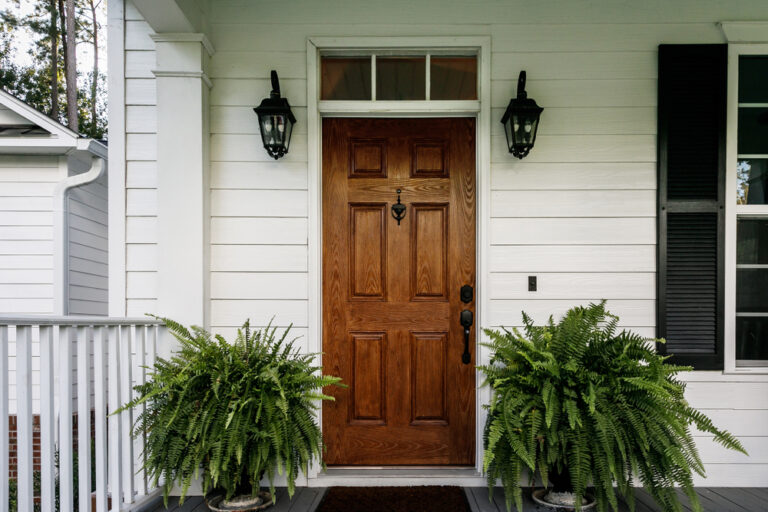
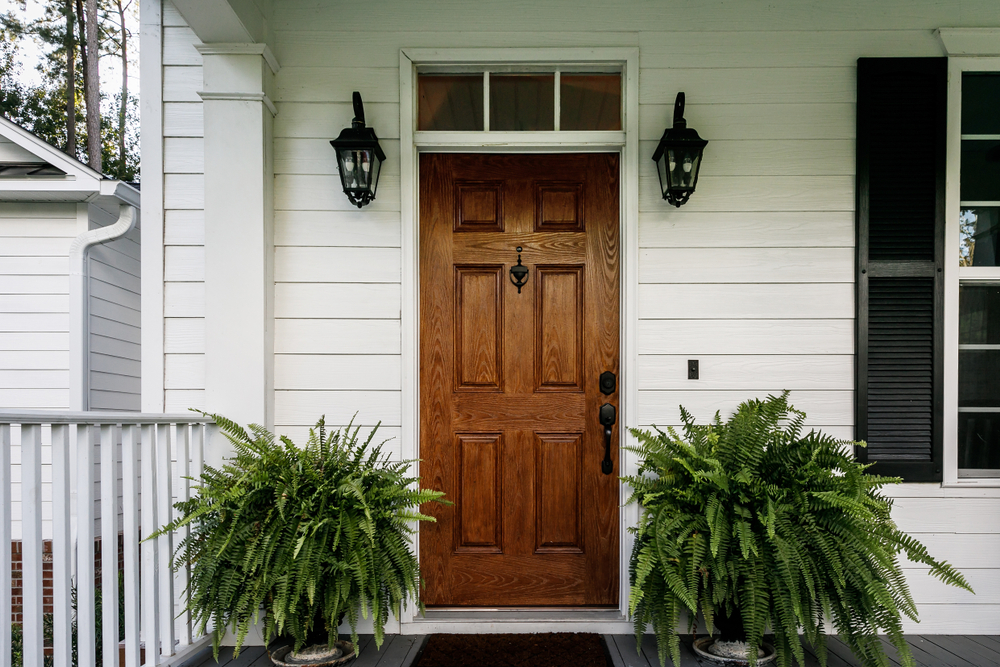
Fiberglass doors can mimic the appearance of natural wood without requiring the same level of maintenance. Depending on the product, they can be painted or stained and are available in many different styles.
They’re also well suited for Kansas City’s changing weather because fiberglass does not react to moisture and temperature changes in the same way natural wood can.
Homeowners often choose fiberglass when they want:
- Good energy performance
- Low maintenance
- A wood-look appearance
- Resistance to dents and weather
- Plenty of style and color options
Steel Entry Doors
Steel doors are another practical option, particularly for homeowners who prioritize strength, security, and value.
Modern steel doors aren’t simply sheets of metal. Many use insulated cores and weather-resistant finishes to improve both comfort and durability.
Steel can be an attractive option if you want:
- Strength and security
- Good insulation
- A clean appearance
- Relatively low maintenance
- Strong value for the investment
Like any exterior material, quality matters. Construction, finish, frame, weatherstripping, and professional installation all affect how the door performs over time.
What About Wood Doors?
There’s a reason wood entry doors have remained popular for generations. A quality wood door can add warmth and character that is difficult to duplicate.
Wood also offers tremendous flexibility in terms of stains, finishes, panels, and decorative details.
The tradeoff is maintenance. Because natural wood responds to moisture, sunlight, and temperature changes, it typically requires more attention than fiberglass or steel.
For homeowners who love the appearance of wood but prefer less upkeep, today’s wood-grain fiberglass doors can provide another option worth considering.
How Much Glass Should Your Front Door Have?
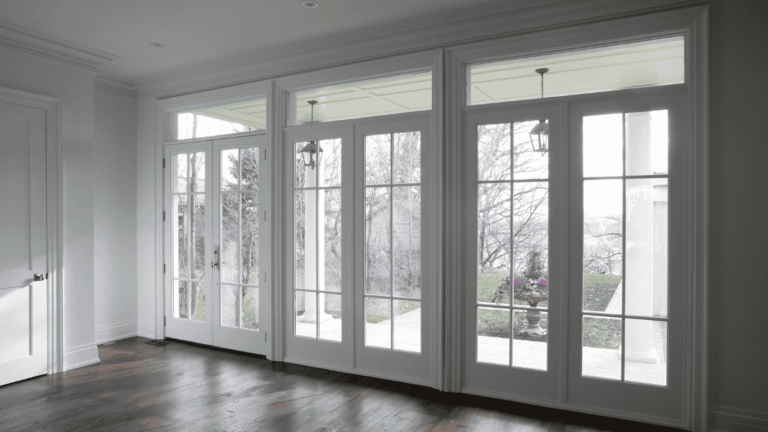
Glass can completely change the appearance of an entryway.
Some homeowners prefer a solid door for privacy, while others want as much natural light as possible. Between those extremes are countless options, including small decorative inserts, half-glass doors, full-view doors, sidelights, and transoms.
Think about what matters most to you:
- Natural light
- Privacy
- Exterior appearance
- Interior appearance
- Energy efficiency
- Security
Glass does affect a door’s energy performance, so this is an area where comparing products matters. ENERGY STAR evaluates exterior doors differently depending on how much glazing, or glass, they contain.
Don't Overlook Energy Efficiency
Curb appeal may get your attention first, but energy performance deserves just as much consideration.
Older, poorly insulated, improperly installed, or poorly sealed exterior doors can allow conditioned air to escape and outside air to enter. The U.S. Department of Energy specifically identifies older and poorly sealed exterior doors as a potential source of wasted energy.
An energy efficient door can help create a tighter exterior envelope and make it easier to maintain comfortable indoor temperatures.
When comparing doors, look beyond appearance and consider the complete door system, including:
- Insulated core
- Frame construction
- Weatherstripping
- Threshold
- Glass package
- Installation quality
This is also where windows and doors naturally connect. If your front door is drafty, there’s a good chance older windows deserve a closer look as well.
Understanding U-Factor and SHGC
You may encounter two terms while comparing energy efficient doors: U-factor and Solar Heat Gain Coefficient, or SHGC.
U-factor measures how well the product limits heat transfer. Lower U-factor numbers generally indicate better insulating performance.
SHGC measures how much solar heat passes through the glass. This becomes especially relevant when choosing doors with larger glass areas.
ENERGY STAR’s current criteria account for both climate and the amount of glass in a door. The National Fenestration Rating Council also maintains a searchable database that allows consumers to verify performance ratings for specific doors and windows.
That makes these ratings useful tools when comparing products rather than relying solely on marketing claims.
New Doors Can Help With Winter Comfort
Kansas City homeowners experience substantial seasonal temperature swings. National Weather Service climate normals for Kansas City International Airport show normal January lows around 20 degrees during much of the month.
If you can feel cold air around your front door during winter, something in the door system may no longer be performing as it should.
Sometimes weatherstripping or adjustment may address a relatively minor issue. Other times, an older door, damaged frame, poor fit, or deteriorated components make front door replacement the better long-term option.
A properly selected and installed replacement door can help reduce drafts and make the area around your entryway more comfortable.
Front Door Replacement Can Transform Curb Appeal
Few home improvement projects change the front of a house as quickly as a new entry door.
Changing the color alone can dramatically alter the appearance of the home. Add new glass, sidelights, hardware, or a different panel design, and the entryway can feel completely new.
A new door can also be coordinated with other exterior improvements.
For example:
- Black or dark-colored windows can coordinate with contemporary door hardware.
- New siding can be paired with a contrasting front door.
- Updated trim can visually connect the windows and entrance.
- New exterior lighting can finish the entryway.
If you’re considering a larger exterior makeover, you may also want to explore New Window Designs Homeowners Are Choosing in 2026 and Vinyl vs. Hardie Plank Siding: Which Is Best for Kansas City Homes?
Installation Matters as Much as the Door
You can buy an excellent door and still be disappointed with its performance if it isn’t installed correctly.
The door needs to fit the opening properly, operate smoothly, seal tightly, and keep water and outside air from entering around the frame.
The Department of Energy’s weatherization guidance specifically addresses weatherstripping and sealing exterior doors because gaps around the door assembly can contribute to air leakage.
Professional installation is particularly important when an existing frame has shifted, deteriorated, or suffered moisture damage.
Choosing the Right Door for Your Kansas City Home
There isn’t one perfect front door for every house.
Your best option depends on your home’s architecture, exposure to weather, desired amount of glass, maintenance preferences, budget, and personal style.
That’s why it helps to compare complete door systems rather than simply choosing the one that looks best in a photograph.
Rolox Home Service can help Kansas City-area homeowners explore entry doors, materials, styles, glass options, and energy-efficiency features to find a solution that fits both the home and the homeowner.
If your current door is drafty, damaged, outdated, or simply ready for a new look, contact Rolox Home Service to learn more about your front door replacement options.
Visit roloxhomeservice.com to explore our services and schedule a consultation.
Frequently Asked Questions About Entry Doors
There isn’t one material that’s best for every homeowner. Fiberglass is popular for its combination of durability, insulation, and low maintenance. Steel offers strength and value, while wood provides a distinctive traditional appearance but typically requires more maintenance.
Many fiberglass entry doors are designed with insulated cores and can provide strong thermal performance. Look at the specific product’s U-factor, ENERGY STAR certification, construction, and glass package rather than assuming every fiberglass door performs the same way.
They can be. Many modern steel entry doors use insulated cores and efficient door systems. The door’s construction, amount of glass, weatherstripping, frame, and installation all affect overall performance.
Energy performance depends on several components working together, including the door material, insulated core, glazing, frame, weatherstripping, threshold, and installation. ENERGY STAR evaluates doors using performance requirements that include U-factor and, when applicable, SHGC.
U-factor measures the rate of heat transfer through the door assembly. Generally, a lower U-factor indicates better insulating performance.
The amount and type of glass can affect energy performance, but that doesn’t mean you have to avoid glass. Modern insulated glass and Low-E technologies allow homeowners to add natural light while maintaining good efficiency. Compare the ratings of the complete door system.
Possible signs include noticeable drafts, difficulty opening or closing the door, visible deterioration, damaged frames, moisture problems, significant gaps, or a door that no longer seals properly.
Yes, particularly when the existing door or frame is damaged, poorly fitted, or no longer seals correctly. Proper professional installation is important because even an efficient new door can perform poorly if gaps remain around the frame.
You don’t necessarily have to, but it can make sense when both are aging. Coordinating the projects can also help create a consistent exterior design and address multiple sources of air leakage.
Absolutely. The front door is a major visual feature of the house. Changing the style, color, glass, or hardware can give the entire front exterior a fresh appearance.